The busiest freight road on the West Coast now has a zero-emission plan that crosses two borders.
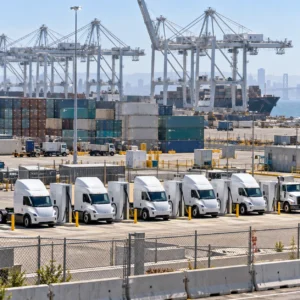
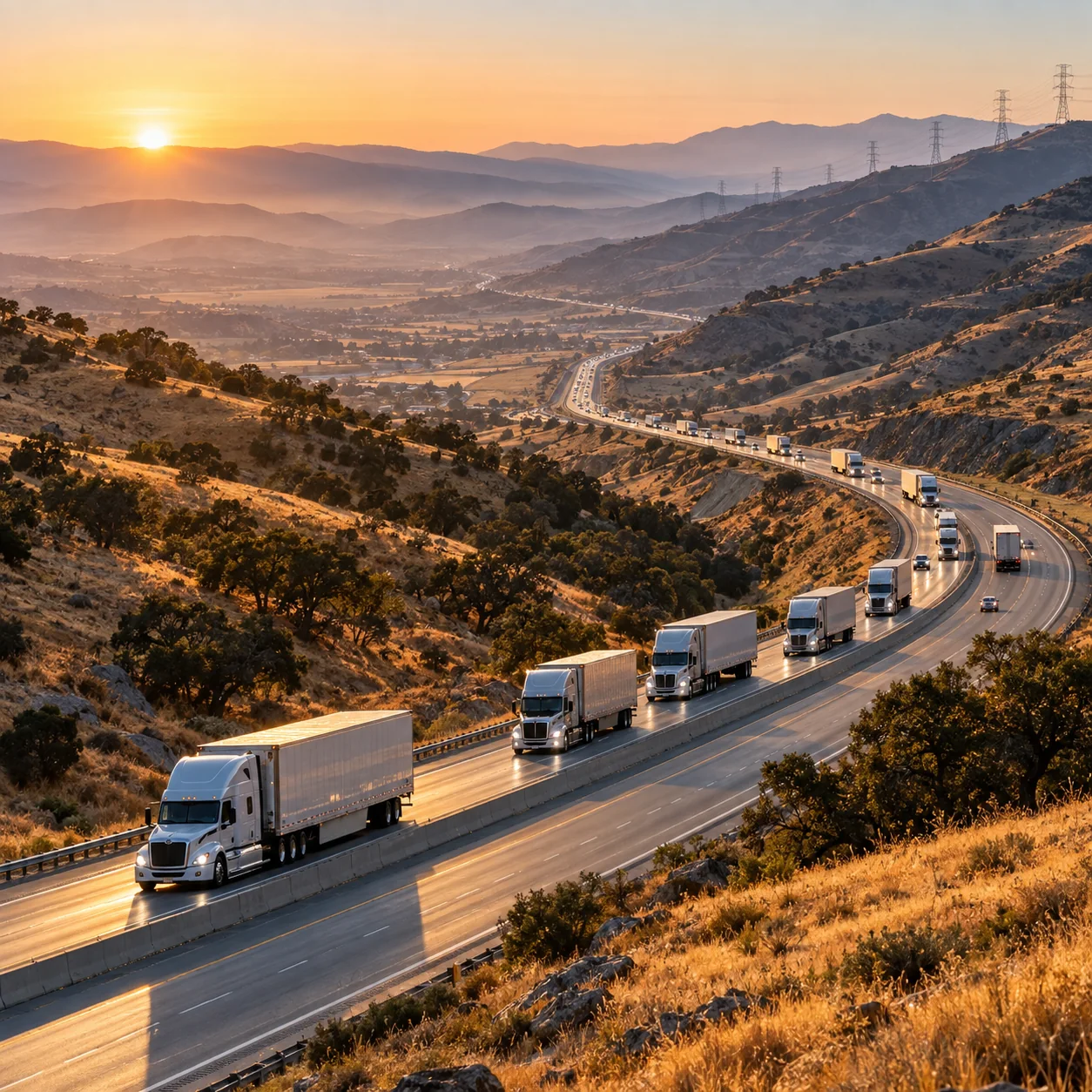
At the end of August, British Columbia, California, Oregon, Washington and Baja California announced the British Columbia to Baja California ZEV Corridor, known as BC2BC, at a ceremony and truck showcase at the Port of Long Beach. The aim is a charging and fueling network that lets battery electric and hydrogen trucks run the length of Interstate 5, from Vancouver to Mexico.
According to Electric Autonomy, the initial buildout calls for 20 charging stations rated at a minimum of 2.5 MW, plus three hydrogen fueling stations, along a route of roughly 2,222 km. Truck News reports that the corridor carries nearly 10,000 trucks a day.
For Canadian carriers moving goods south, this is the first time the whole route has been planned as one network.
Freight Corridors Do Not Stop at Borders
Most charging planning in North America happens one jurisdiction at a time. Provinces fund their own stations, states run their own grant rounds, and utilities plan to the edge of their service territories. Trucks do not work that way.
Electric Autonomy notes that daily traffic on the I-5 can rise to as many as 35,000 trucks. A carrier running from the Lower Mainland to Southern California crosses an international border and three state lines, and each one has its own permitting rules, utility tariffs and funding programs.
BC2BC puts the five governments on a shared footing. According to CALSTART’s Drive to Zero program, the partners will hold a series of technical meetings to align guidance, technical standards and planning. The California State Transportation Agency, the UC Davis Institute of Transportation Studies and CALSTART are coordinating planning and public investment.
Standards first, steel second. That is the right order.
California Transportation Secretary Toks Omishakin described the effort in economic terms, saying “partnerships like this are more critical than ever to strengthen our economies.”
A 2.5 MW Floor Tells the Market What to Build
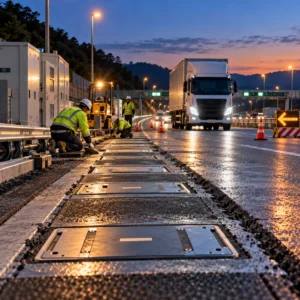
The power specification matters most for the industry. A minimum of 2.5 MW per station puts the corridor firmly in megawatt charging territory, the class of power needed to recharge a heavy truck during a driver’s break rather than over a full shift.
Setting that bar early gives hardware suppliers, site developers and utilities a clear planning target. Committing to interoperable infrastructure across all five jurisdictions means a truck leaving British Columbia should be able to plug in the same way in Oregon or Baja California.
Volvo Group North America, one of the industry participants, told Electric Autonomy that “freight corridors are where electrification can deliver real operational value at scale.”
That is the commercial case in one line. Fleets buy trucks for routes, not for regions.
Industry Is Already at the Table
According to Drive to Zero, the launch brought together Tesla, Volvo Group North America, Southern California Edison, EV Realty, King Fio Trucking, IMC Logistics and ZM Trucks. Between them they cover truck makers, a utility, a charging site developer, carriers and a shipper.
Heavy-duty charging needs every one of those groups working from the same plan. Having them present at the start, before sites are chosen, makes it far more likely that the first stations land where freight actually stops.
Where should the first 20 stations go?
And who will build and operate them?
Those decisions are still ahead. As Drive Tesla Canada points out, what the governments signed is a statement of principles on shared standards and planning, not a construction contract. Sites, operators, funding and timelines have yet to be set. For cross-border infrastructure that is a normal starting point, and it leaves room for developers and utilities to shape the plan.
What Canadian Operators and Utilities Should Watch
British Columbia anchors the northern end of the corridor, which gives provincial fleets, charge point operators and utilities a defined role in a continental freight project. The next phase will reward the organisations that engage early.
- Where the first station sites land, and how many sit north of the border
- How the 2.5 MW floor shapes procurement for en route and depot charging
- Utility interconnection timelines for multi-megawatt sites near Lower Mainland freight hubs
- How federal and provincial funding lines up with the corridor’s shared standards
- Whether charging and hydrogen fueling can share sites to cut grid and land costs
- How fleets will access and pay for charging across three countries
Utilities deserve special attention. A string of 2.5 MW sites along a single highway is a grid planning exercise as much as a transport one, and early load forecasting will shorten the path from announcement to energised site.
Corridors Are Becoming the Unit of Planning
BC2BC sits within the Global Green Road Corridors initiative, which targets the decarbonization of major medium- and heavy-duty trade routes, according to Electric Autonomy. Drive to Zero also links the work to the California and Baja California Border Master Plan led by Caltrans.
The corridor model concentrates investment where freight already moves. It gives truck buyers a route they can underwrite, gives charging developers predictable demand, and gives utilities a defined set of loads to plan around. For investors, it turns a scattered set of projects into a pipeline.
For Canada, the opportunity is to make sure the northern end is built to the same standard as the rest of the route, so that electric trucks leaving Vancouver are part of the network from the first mile.
Charging networks have been built province by province and state by state. Freight was always going to make them connect.