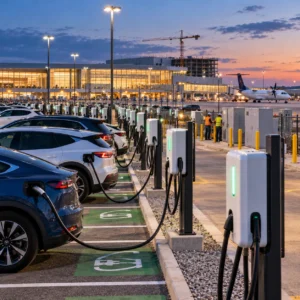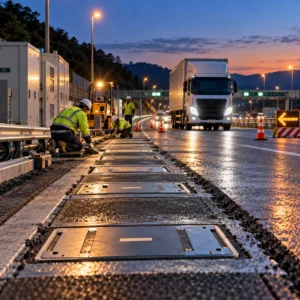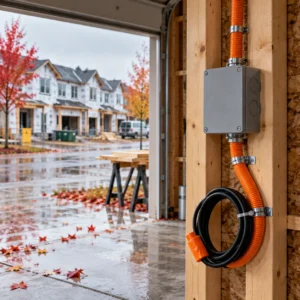

Canada’s fast charging network is getting busier.
According to Paren’s Q3 2026 report on Canadian fast charging, published October 13, 2026, tracked public fast charging ports recorded 3.84 million sessions between July and September, up 37 per cent from 2.80 million a year earlier. National utilization rose to 10.38 per cent from 9.55 per cent in the second quarter, and every province and territory posted a gain over Q2.
For years the Canadian charging story has been about building ahead of demand. The Q3 numbers suggest demand is starting to close the gap, and that shift changes how operators, utilities and investors should read the market.
Demand Is Starting to Catch the Build-Out
The network kept growing. Paren counts 103 new stations and 391 new ports in the quarter, bringing Canada to 2,740 fast charging stations and 9,615 ports as of September 30. Ports are up 26.8 per cent from Q3 2025.
What stands out is that usage rose even as capacity expanded. On networks tracked in both quarters, utilization climbed to 10.7 per cent from 9.4 per cent, and Paren says 96 per cent of those ports sit on networks where utilization improved. Monthly sessions reached 1.29 million in July and 1.38 million in August 2026.
That is the signal operators have been waiting for.
Utilization is the number that turns a charging site from a grant-supported asset into a business. Every point gained shortens the payback on a dispenser, a transformer and a grid connection.
The Busiest Corridors Point to Where Capital Should Go
The provincial and metro data show where that demand is concentrated. British Columbia led at 13.1 per cent utilization, followed by Ontario at 11.5 per cent and Prince Edward Island at 10.1 per cent. New Brunswick jumped to 9.0 per cent from 5.4 per cent in Q2.
At the metro level, Vancouver ports were in use 22.8 per cent of the time, Toronto 17.3 per cent, Kitchener, Cambridge and Waterloo 16.4 per cent, and Calgary 14.7 per cent. Eight of the 10 largest metros improved on Q2, led by Kitchener, Cambridge and Waterloo at 2.2 points, Calgary at 2.1 points and Quebec City at 1.8 points.
For site developers, those figures are a map. High-utilization metros can justify larger sites and higher power, while fast-improving markets such as Calgary and New Brunswick are where early movers can still secure good locations before competition arrives.
Quebec and Rural Canada Carry the Build
Quebec added 49 stations in the quarter, nearly half the national total, while Ontario added 22 and British Columbia 18. Circuit électrique added 61 ports, and Paren notes large new Quebec sites including 24 ports at Mont-Tremblant and 16 at Drummondville.
Rural coverage also improved. Paren counts 46 rural station openings, up from 36 in Q2, with Circuit électrique leading at 12. Newfoundland and Labrador grew to 43 tracked stations from six in Q2, and New Brunswick and the Northwest Territories returned to the list of jurisdictions adding sites.
That matters for confidence. Drivers outside the major cities buy electric vehicles when they trust the highway, and rural sites are what make that trust possible.
Lower Prices and Smarter Tariffs Reward Drivers
Pricing moved in drivers’ favour. Paren puts the national average at $0.486 per kWh, down from $0.500 in Q2, with Nova Scotia down 11.2 per cent and Saskatchewan down 7.3 per cent. Fixed per-kWh pricing is now the most common model for non-member sessions.
Time-of-use pricing is spreading quickly. It now applies at 142 of 1,059 per-kWh stations, or 13.4 per cent, up from 7.7 per cent in Q2, and off-peak charging saves about 12 cents per kWh compared with fixed rates. For utilities, that is a practical tool to steer charging away from peak hours without new rules.
Operators planning the next round of sites should weigh several lessons from the quarter:
- Utilization is rising fastest in Calgary, Kitchener, Cambridge and Waterloo, and Quebec City
- Larger sites in high-demand metros spread grid connection costs across more sessions
- Time-of-use pricing can shift load and lower costs for drivers
- Rural corridors build driver confidence that supports urban demand
- Transparent per-kWh pricing is becoming the market norm
The Path to 20 Per Cent Utilization
There is still distance to cover. Daniel Breton, president and CEO of Electric Mobility Canada, writing in the Paren report, notes that the national use rate remains far from the 20 per cent threshold he points to, and says government support will be needed for some time. He also says that “fast charging deployment growth is more than keeping pace with the Canadian EV market.”
That combination is a healthy place to be. A network that leads demand by a measured margin gives drivers confidence, while rising session counts give operators a clear path toward profitability.
Which operators will be ready with high-power sites where utilization is climbing fastest?
And which utilities will use pricing and planning to keep that growth affordable?
Canada spent years building chargers for drivers who had not arrived. In Q3 2026, more of them showed up.